Protein Targets by Bodyweight: A Practical Guide
How much protein per kg do you actually need? Evidence-based targets by bodyweight for general health, muscle, weight loss and older age.
By Tony Dalton · Updated
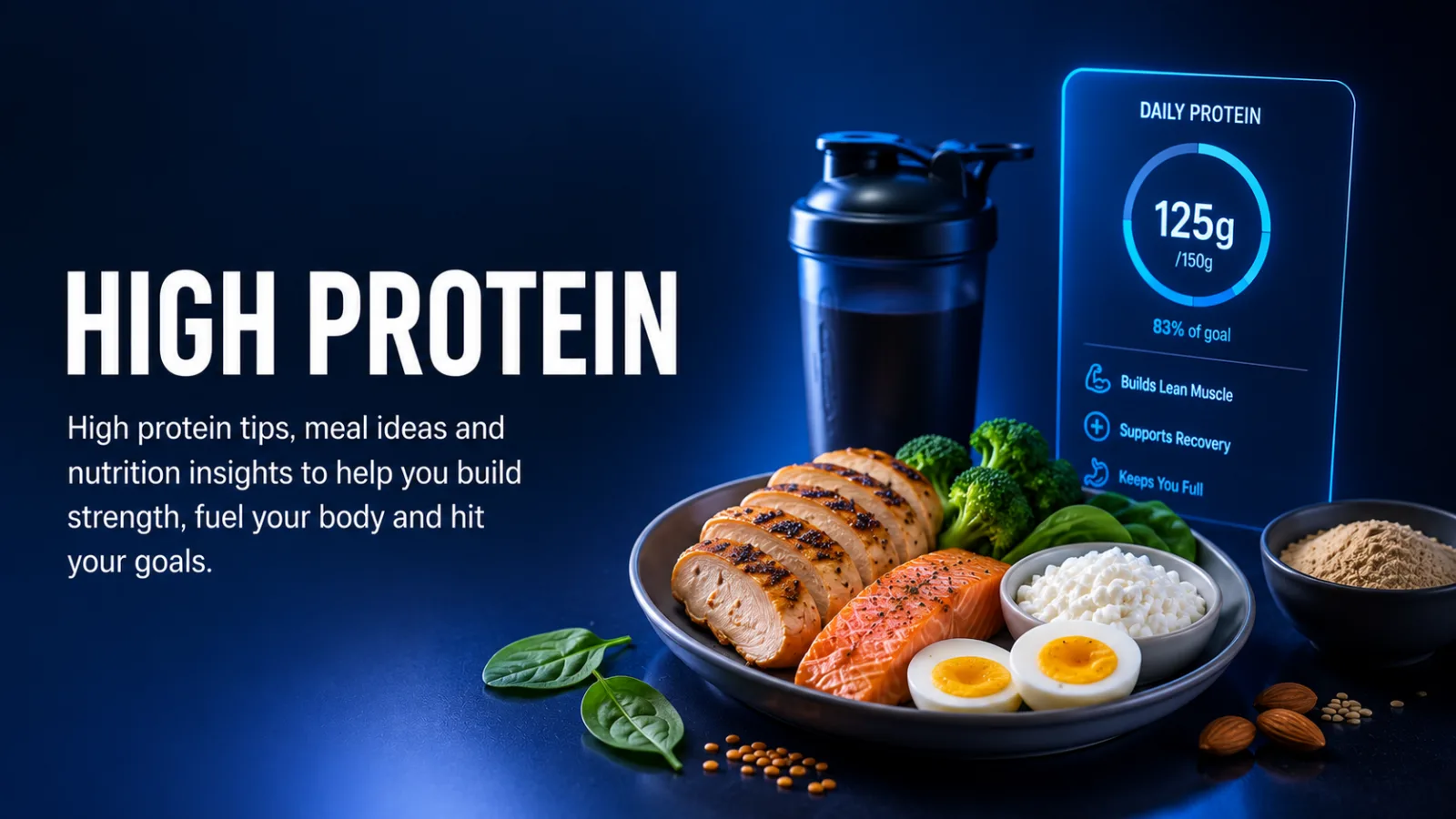
Protein advice tends to come in two flavours: a baseline that is too low for anyone trying to change their body, and influencer numbers plucked from nowhere. The truth sits in between, and it is well evidenced. This guide walks through how much protein you need per kilogram of bodyweight for different goals, where the figures come from, and how to put them on a plate.
Throughout, work from your target (goal) bodyweight rather than your current weight if you are carrying a lot of excess fat. Protein needs scale with lean tissue, not with fat, so anchoring to a sensible goal weight avoids inflating the number. If your goal weight and current weight are close, use either.
None of this is medical advice. If you have kidney disease or another condition that affects how your body handles protein, speak to your GP or a registered dietitian before raising your intake.
The baseline: what the RDA covers
The Recommended Dietary Allowance for protein is 0.8 g per kg of bodyweight per day for healthy adults. So a 70 kg person hits the RDA at about 56 g a day.
The caveat, made plainly by Harvard Health, is that the RDA is the minimum needed to prevent deficiency in most people, not the optimum for everyone. It says nothing about building muscle, holding onto muscle while dieting, or ageing well. For those goals you need more.
Why active people need more
Resistance training raises the rate at which your body breaks down and rebuilds muscle protein. Eat only the RDA and you may not give it enough raw material to come out ahead. This is why the International Society of Sports Nutrition (ISSN) puts the useful range at 1.4 to 2.0 g/kg/day for most people who exercise, well above the 0.8 g/kg baseline.
Endurance athletes, people new to training, and anyone in a calorie deficit all sit towards the upper half of that range rather than the bottom.
The 1.6 g/kg sweet spot
If you want one number to aim for while strength training and eating roughly at maintenance, 1.6 g/kg/day is the best-supported target.
It comes from a 2018 meta-analysis by Morton and colleagues in the British Journal of Sports Medicine, which pooled 49 studies. They found that extra protein kept improving training-induced gains in fat-free mass up to a breakpoint of 1.62 g/kg/day, beyond which more protein produced no further benefit on average. The 95% confidence interval ran from 1.03 to 2.20 g/kg/day.
That confidence interval matters. It tells you the true plateau could be as low as ~1.0 or as high as ~2.2 g/kg depending on the individual. So 1.6 g/kg is a sensible central target, not a hard ceiling. Eating somewhat more is not harmful for healthy kidneys; it simply may not add much.
Going higher during weight loss
When you cut calories, two things happen: your body becomes more willing to break down muscle for fuel, and the protein you eat has to work harder to protect lean tissue. So weight loss is the one situation where you deliberately push protein above the muscle-building target.
The ISSN notes that intakes of 2.3 to 3.1 g/kg/day may help resistance-trained people preserve lean mass during aggressive, hypocaloric dieting. Most people in a moderate deficit do not need to go that high. A practical protein target for weight loss is roughly 1.8 to 2.4 g/kg of goal bodyweight, paired with strength training so the muscle you keep has a reason to stay.
Higher protein helps in a simpler way too: it is filling, and more of its energy is spent on digestion than with carbohydrate or fat.
Special cases
GLP-1 medications and rapid loss
GLP-1 medicines such as semaglutide and tirzepatide can drive fast weight loss, and appetite suppression makes it easy to under-eat protein. As clinicians at Massachusetts General Hospital note, losing lean mass is a feature of weight loss in general, not unique to these drugs, but it can be blunted by combining adequate protein with regular resistance exercise, which preserves muscle and bone better than dieting alone. On a GLP-1, treat protein as a daily priority you build meals around.
Older adults
Ageing muscle responds less efficiently to protein, a phenomenon known as anabolic resistance, and sarcopenia (age-related muscle loss) raises the stakes. Many researchers argue the 0.8 g/kg RDA is too low for older people, with intakes nearer 1.0 to 1.2 g/kg/day better supporting strength and independence, more if active or recovering from illness. Combine it with resistance work.
Kidney disease
This is the one group for whom more protein is not the answer. For people with chronic kidney disease who are not on dialysis, the National Kidney Foundation recommends a lower-protein diet, because protein waste is harder for impaired kidneys to clear. If you have any kidney condition, do not raise your intake on the strength of an article. Ask your healthcare professional about seeing a kidney dietitian to find the right amount for you.
Spreading protein across meals
Total daily protein is what matters most, but how you distribute it has a smaller, real effect. Muscle protein synthesis responds to a dose of protein in a given meal, and very large single servings do not add proportionally more.
The ISSN suggests a per-meal dose of about 0.25 g/kg of bodyweight, or 20 to 40 g, ideally spread evenly every three to four hours. In practice that means three or four protein-anchored meals rather than a token breakfast and a giant dinner.
For a 70 kg person, that is roughly 30 to 40 g of protein at each of three meals, which comfortably clears 1.6 g/kg without forcing it into one sitting.
Worked examples
Using goal bodyweight, here is what the targets look like in grams per day.
- 60 kg, general health and training (1.6 g/kg): about 96 g/day, roughly 30 g across three meals plus a small top-up.
- 70 kg, weight loss (2.0 g/kg): about 140 g/day, around 35 g across four meals or snacks.
- 80 kg, strength training at maintenance (1.6 g/kg): about 128 g/day, near 40 g across three meals plus a snack.
- 65 kg older adult preserving muscle (1.2 g/kg): about 78 g/day, around 25 to 30 g per meal to clear the per-meal threshold.
Round to convenient numbers. Hitting 130 g instead of a calculated 128 g changes nothing; consistency over weeks is what counts.
Practical high-protein foods
You do not need powders, though a scoop of whey is a tidy way to fill a gap. Reliable everyday options include chicken, turkey, lean beef and pork, white fish and salmon, eggs, Greek yoghurt, cottage cheese, milk, tinned tuna, tofu, tempeh, edamame and pulses. Anchoring each meal to one of these does most of the work.
Frequently asked questions
How much protein per kg should I eat?
For general health, 0.8 g/kg is the minimum. If you train and want to build or keep muscle, aim for around 1.6 g/kg; the ISSN range of 1.4 to 2.0 g/kg covers most active people. During weight loss, push towards 1.8 to 2.4 g/kg of goal bodyweight.
Should I use my current weight or my goal weight?
If you are carrying a lot of excess fat, calculate from your goal (target) bodyweight, because protein needs track lean tissue rather than fat. If your current and goal weights are close, either works.
Can I eat too much protein?
For healthy adults, intakes around and above the muscle-building target are not harmful; they simply may not add benefit beyond it. The clear exception is kidney disease, where lower protein is often advised. Check with a clinician if that applies to you.
Does protein timing matter?
Far less than your daily total. Spreading it across three or four meals of 20 to 40 g each is a sensible refinement once your total is dialled in, not a reason to watch the clock.
Do I need protein shakes?
No. Whole foods such as meat, fish, eggs, dairy and pulses can hit any of these targets. Shakes are convenient, not magic.
Is more protein better for older adults?
Generally yes, within reason. Ageing muscle responds less efficiently to protein, so many researchers suggest around 1.0 to 1.2 g/kg/day, paired with resistance exercise, to protect strength and independence.
Conclusion
Forget the gram-counting arguments. Anchor to your goal bodyweight, aim for about 1.6 g/kg if you train, nudge towards 1.8 to 2.4 g/kg while losing weight, and spread it across three or four meals of 20 to 40 g. Older adults should lean higher; anyone with kidney disease should lean lower and take advice first. That is the whole evidence-based picture.
Weightlytic tracks your protein against a target you set, so you can see your daily hit rate at a glance and adjust without doing the maths each meal. The aim is steady habits, not perfect spreadsheets.
Sources & references
- Morton et al. (2018), British Journal of Sports Medicine — protein supplementation meta-analysis (breakpoint 1.62 g/kg/day, 95% CI 1.03–2.20)
- International Society of Sports Nutrition Position Stand: Protein and Exercise (Jäger et al. 2017)
- Harvard Health — How much protein do you need every day? (RDA 0.8 g/kg)
- National Kidney Foundation — CKD diet: how much protein is the right amount?
- Massachusetts General Hospital — Preserving lean body mass in patients taking GLP-1 for weight loss
Related articles
Track your weight loss with WeightLytic.
AI forecasting, GLP-1 companion, and protein tracking — all in one app. Free on iPhone and Android.